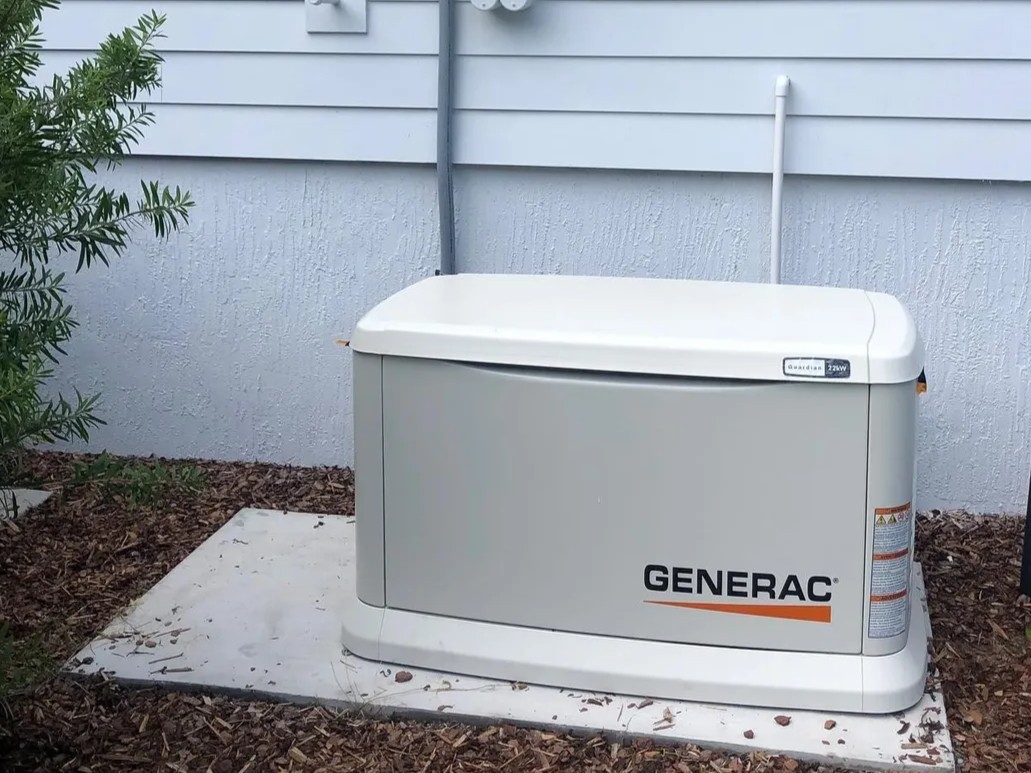
You supply the generator — we handle the complete electrical installation: transfer switch, wiring, permit application, and inspection sign-off. Done right, to code.
Greater Vancouver averages several significant outages per year — windstorms, grid faults, and ice events. Without backup power, these systems fail immediately.
Heat pump, furnace blower, and air conditioning all require electricity. No power means no heat in winter — a serious safety risk in freezing temperatures.
Outages often accompany heavy rain. A dead sump pump during a storm can mean thousands of dollars in basement flooding and insurance claims.
Refrigeration fails within hours. Security systems go offline. If you work from home, an outage means lost productivity and missed deadlines.
A properly installed generator eliminates every one of those risks. Here's what you get with a permitted, code-compliant installation.
Standby generators detect an outage and turn on within seconds — no action needed from you.
Sump pump, heat pump, medical equipment, fridge, and home office — all stay powered.
Standby generators run on natural gas or propane — no jerry cans, no fuel shortages.
A permanently installed standby generator adds measurable value to your home.
Permitted installation with a proper transfer switch — the only safe and legal way to connect a generator.
Whether you're home or away, your family and property are protected when power goes out.
Both options require a licensed electrician and an electrical permit. Your choice depends on your budget, how often you lose power, and how hands-off you want the system to be.
Most homeowners choose the standby option — especially if you have a heat pump, sump pump, or medical equipment. It's fully automatic, runs on natural gas, and protects your home even when you're away.
You supply the generator. We handle everything electrical — from the permit application to the final inspection sign-off.
We handle the full electrical system — design, load calculation, permit, installation, and inspection approval. No paperwork or coordination on your end.
Generator installation involves a site visit before a final quote can be issued. Here's what to send us first to speed up the process.
Photos + a few details let us provide a preliminary budget before we visit — no waiting for a site visit to get a ballpark.
Your electrical meter — usually on the exterior of the home. This tells us how your service is configured.
Your main electrical panel — clear photo showing the breaker labels and any available space.
Planned generator location — outside wall, pad area, or where you want the inlet box installed.
List of critical loads — what you want backed up: heat, fridge, sump pump, home office, medical equipment, etc.
Send us photos of your meter, panel, and planned generator location along with a list of what you want backed up. We review and provide a preliminary budget — often without needing to visit first.
Once the preliminary budget is accepted, we schedule a site visit. We confirm the installation details, finalize the quote, and collect a deposit before pulling permits and scheduling.
We apply for the electrical permit — through TSBC or your city's electrical department, depending on your municipality. For standby generator installations that require a BC Hydro service disconnect, we submit the scheduling request — BC Hydro typically takes 1–2 weeks to confirm a date. We'll keep you informed throughout.
We install the transfer switch, generator wiring, and inlet box. Power will be off for approximately 1–2 hours during the panel work. The work area around the electrical panel must be clear. For standby generators, the gas contractor connects the fuel supply — we coordinate directly with them.
We coordinate and attend the electrical inspection. Once it passes, we do a full system test and walk you through how everything operates — transfer switch, generator start, and load transfer. You receive a complete, inspected, code-compliant backup power system.
Yes — connecting a generator to your home's electrical system requires an electrical permit and inspection in BC. Depending on your municipality, this is issued by TSBC or your city's electrical department. This applies to both standby generators and portable generators connected via a transfer switch. Unpermitted generator connections are unsafe and can void your home insurance. We handle all permits on your behalf — no paperwork for you.
No — we focus exclusively on the electrical installation. You purchase the generator through a dealer or supplier of your choice. We advise on sizing and specifications before you buy so the unit matches your transfer switch and load requirements. Popular brands we commonly work with include Generac, Kohler, and Briggs & Stratton.
Natural gas and propane supply lines must be connected by a licensed gas contractor — this is outside our electrical scope. We coordinate directly with the gas trade and can refer you to contractors we've worked with on previous installs. Both trades need to be on-site at different stages, and we manage the sequencing.
No — running extension cords from a generator directly to appliances is both unsafe and a violation of the Canadian Electrical Code. More importantly, without a transfer switch isolating your home from the grid, there is a risk of back-feeding power onto utility lines — creating a life-threatening hazard for BC Hydro workers restoring power. A proper transfer switch is the only safe and legal solution.
For standby generators with an ATS, BC Hydro typically needs to disconnect and reconnect service at the meter. Scheduling a BC Hydro disconnect can take up to two weeks after the request is submitted — this is one of the main factors that affects your overall project timeline. For portable generator hook-ups (manual transfer switch only), a BC Hydro disconnect is usually not required.
We submit the BC Hydro scheduling request on your behalf and will notify you of the confirmed date as soon as it's set.
Generator sizing depends on what you want to power during an outage. During the quoting process, we'll review your critical loads — heating, refrigeration, sump pump, medical equipment, and any other priorities — and give you a clear sizing recommendation. As a general reference:
Portable generator hook-ups are sized by the inlet rating — 30A for smaller generators (~5kW), 50A for larger models (7kW–10kW).
The panel work requires the power to be off for approximately 1–2 hours. We'll give you advance notice of the date and the expected outage window so you can plan accordingly. The work area around the electrical panel needs to be clear and accessible on the day of installation.
Ready to get started? Send us photos of your panel, meter, and planned generator location — we'll come back with a preliminary budget quickly.
Attach photos of your electrical panel, utility meter, and planned generator location — this lets us provide a preliminary budget much faster.